
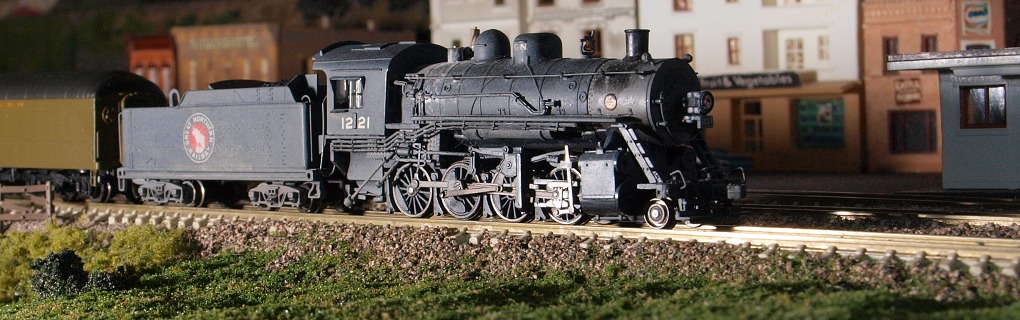
U.S. Sugar’s excursion arm, Sugar Express, has put a century-old Pennsylvania Railroad business car back into service. The “Clewiston” was pressed into service over the winter and is now available for group charters on Sugar Express’ Lake Placid Limited.
Built in April 1911 by the Pullman Company, car 7505 began its life on the Pennsy in executive service. Starting in 1929, it began to work its way down the management ladder, being used by general managers and then superintendents. Eventually, it was pressed into maintenance of way service. The car was eventually sold, finding its way to James H. Clement, son of Pennsylvania Railroad president Martin Clement, who restored the car and later donated it to the Galveston Railroad Museum.
Upon arrival at Clewiston, the interior of the car was rebuilt, and it can now accommodate 15 guests.
Sugar Express began operations a few years ago following the restoration of 4-6-2 148. Visit SugarExpress.com for more.
—Justin Franz
The post U.S. Sugar Puts PRR Biz Car in Service appeared first on Railfan & Railroad Magazine.
Together with Prairies Economic Development Canada and the Province of Manitoba, the Arctic Gateway Group (AGG), Winnipeg Airports Authority (WAA), and CentrePort Canada Inc. on Jan. 20 reported signing a Memorandum of Understanding (MOU) that is intended to “strengthen Manitoba’s trade network, further diversify Canadian trade routes, and provide better access for businesses to global markets.”
Under the agreement, called the “Ports Manitoba Project,” AGG, which owns and operates the Port of Churchill and Hudson Bay Railway; WAA, an international cargo airport; CentrePort Canada Inc., a trimodal inland port; and the government partners “commit to developing an integrated, resilient supply chain that moves goods and people more efficiently across air, land, and sea.” Additionally, the agreement “emphasizes shared goals of expanding access to international markets, increasing trade capacity, attracting international investment, and leveraging Manitoba’s central location and maritime access through Hudson Bay.”
The group reported that AGG’s northern transportation network will be “strategically linked” with the airport’s year-round air cargo capabilities, and the rail, road, and industrial land infrastructure at CentrePort Canada Inc. in Winnipeg, which has access to CN, Canadian Pacific Kansas City, and BNSF. CentrePort Canada is slated to “play a central role in supporting companies seeking streamlined access to multiple modes of transportation.”
“Building one Canadian economy means working with key partners to strengthen the trade corridors that bring Prairie products to domestic and global markets”, said Eleanor Olszewski, Minister of Emergency Management and Community Resilience and Minister responsible for Prairies Economic Development Canada. “This initiative advances that work and build on our government’s recent investments in Arctic Gateway Group, the Port of Churchill and CentrePort, which have improved supply-chain efficiency, reduced barriers to interprovincial trade, and advanced trade diversification.”
“Manitoba sits at the center of the country and now we’re building our place at the center of trade,” commented Jamie Moses, Minister of Business, Mining, Trade and Job Creation for the Province of Manitoba. “With partnerships like this—and initiatives like the Manitoba Crown-Indigenous Corporation—we’re working alongside our transportation sector partners and Indigenous nations to make sure major projects deliver real benefits for Manitobans. That’s how we create jobs, grow the economy, and strengthen Manitoba’s role in global trade.”
“Canada needs new routes to global markets, and Manitoba is primed to step up and deliver,” AGG President and CEO Chris Avery said. “By bringing together the Port of Churchill, Winnipeg’s international airport, and CentrePort, we’re aligning Canada’s Arctic Trade Corridor with its largest inland port and its premier cargo airport to build something far greater than the sum of its parts.”
“Companies around the world are looking for reliable, resilient supply chains, and Manitoba is ideally positioned to deliver exactly that,” pointed out Carly Edmundson, President and CEO of CentrePort Canada Inc. “By working together, we catalyze Manitoba’s trade-enabling infrastructure to allow goods to move more easily throughout Canada, and enhance our connections with global markets.”
“This MOU is about strengthening how Manitoba’s trade and transportation assets work together,” added Nick Hays, President and CEO of WAA. “Improved multi-modal coordination enables a more integrated and resilient trade network. This in turn supports long-term economic opportunity for the province and for Canada.”
Further Reading:The post ‘Ports of Manitoba Project’ to Boost Trade in Manitoba appeared first on Railway Age.
The MDOT MTA on Jan. 21 announced the launch of a new student discount program that will save students 50% on a one-way or monthly MARC Train ticket.
Students enrolled in a high school, vocational/trade school, formal technical training program, college or university, including undergraduate and graduate programs, can take advantage of the MARC Student Saver program, which the agency says, “reflects its commitment to connecting students to educational institutions, jobs and opportunities throughout the region.”
(Image Courtesy of STV)“The MARC train is a tremendous asset for our region, and we’re excited to welcome new student riders to the system,” said Maryland Transit Administrator Holly Arnold. “This program ensures that students, regardless of income, can access education, internships, jobs, and community events without transportation being a barrier.”
Eligible students must complete the registration process and confirm enrollment in a qualifying educational institution. Once registered, students will be able to purchase tickets through CharmPass, the agency’s official mobile ticketing app, for trips taken on any of MARC Trains three lines: Penn, Camden or Brunswick. Students must register annually and provide updated documentation to continue participating in the program. Detailed instructions and FAQs on how to register for the program are available here.
The MARC Student Saver program, MDOT MTA says, “will make it easier for students to travel throughout the region and state, and expands on the agency’s ongoing efforts to enhance rider connectivity.” In August 2024, the agency established a cross-honor program with Virgina Railway Express (VRD) and in 2025 released the MARC Growth and Transformation (G&T) Plan and began construction to modernize the Martin Maintenance Yard, “a key component to delivering more frequent service that better serves markets as outlined in the G&T plan.”
DARTDART on Jan. 21 announced that it has agreed to hold off on issuing new debt until after November elections, following a formal request from the agency’s Board of Directors Chairman Randall Bryant. “The promise comes amid pending elections on May 2, where voters in five DART member cities are expected to decide the fate of the agency in their city,” the agency noted.
“In an effort to address the concerns raised by DART member cities, I have directed our President & CEO, Nadine Lee, to ensure that no long-term debt issuance requests are brought for DART Board consideration until after the November 2026 election date,” said Bryant. “We welcome feedback from our partners on solutions that benefit all cities while ensuring DART continues to provide critical public transportation services for our residents and communities.”
By law, DART says it “will continue to collect sales tax from cities whose voters choose to leave DART until the city’s portion of its statutory obligation is recovered.”
“DART will agree to hold off on issuing more debt as North Texas residents head to the polls to vote on DART. Our priority has been to our riders from the outset of this process, and this allows us to release some of the urgency our member cities feel as they make decisions in the coming months.” said Lee. “This will delay some of the scheduled and promised updates the DART staff has been working on, but as good-faith partners in these negotiations, we will honor this compromise.”
DART has received formal requests from three of the five cities with elections on the calendar. Before elections were called, DART, member cities and the North Central Texas Council of Governments (NCTCOG) engaged in mediation to find a solution to a series of previous requests from the cities. The next step of that process is for DART to complete a rate study that explores and explains the all-in costs by mode of providing transit services, according to the agency.
PRTPRT on Jan. 20 announced a new tool to increase accessibility for riders across Allegheny County. Beginning yesterday, Deaf and hard-of-hearing riders can connect instantly with a live ASL interpreter through the new Aira ASL app, “making PRT one of the most accessible transit systems in the nation,” according to the agency.
With just a tap, riders can launch the Aira ASL app and be connected in seconds to a professional ASL interpreter. Using the caller’s smartphone camera and microphone, interpreters help bridge conversations in real-time—whether riders are purchasing fares at the Downtown Service Center or communicating with others. The service is available anywhere in PRT’s transit network 24/7/365 with no advance scheduling required.
This launch, the agency says, “builds on PRT’s existing partnership with Aira, which already powers Aira Explorer, an on-demand visual interpreting service for blind and low-vision riders. With the addition of Aira ASL, PRT becomes the first public transit system in the country to offer both on-demand visual and ASL interpreting services.”
“This is another step toward our commitment to equitable and inclusive transit for all,” said PRT CEO Katharine Kelleman. “By teaming up with Aira and embracing this innovative technology, we’re making it easier than ever for riders of all abilities to travel confidently and reach the destinations that matter most.”
“Aira is proud to partner with PRT as they expand their on-demand interpreting offerings,” said Henri Grau, Director of Deaf Community Engagement at Aira. “The addition of Aira ASL at PRT means Deaf and hard of hearing riders can count on smoother communication, improved experiences, and access to information whenever the need arises.”
The post Transit Briefs: MDOT MTA, DART, PRT appeared first on Railway Age.
House and Senate Appropriations Committee Leaders on Jan. 20 unveiled H.R. 7148, the Consolidated Appropriations Act, 2026, which represents a “bipartisan, bicameral” agreement on Fiscal Year (FY) 2026 appropriations legislation. The legislation includes the Transportation, Housing and Urban Development, and Related Agencies Appropriations Act, 2026 (Division D) (THUD Appropriations Act).
The final, bipartisan THUD Appropriations Act (download below) “provides the overwhelming majority of public transit and passenger rail investments authorized in the Infrastructure Investment and Jobs Act (IIJA), according to the American Public Transportation Association (APTA), which strongly support the legislation.
Specifically, the THUD Appropriations Act, together with the IIJA’s advance appropriations, provides a total of $21.1 billion for public transit in FY 2026, an increase of $168 million from the FY 2025 enacted level. In addition, the THUD Appropriations Act and IIJA provide $15.9 billion for passenger and freight rail in FY 2026, a decrease of $298 million from the FY 2025 enacted level.
According to APTA, the House of Representatives is slated to vote on H.R. 7148 in the next couple of days, and the Senate plans to consider the legislation next week, before the Jan. 30 deadline.
BILLS-119hr7148ihDownload Public TransitThe THUD Appropriations Act and IIJA provide $21.1 billion for public transit in FY 2026, an increase of $168 million from the FY 2025 enacted level. This total appropriation is $1.2 billion less than the amount authorized in the IIJA.
The THUD Appropriations Act fully funds the public transit contract authority of $14.6 billion, as provided by the IIJA, which allows the Federal Transit Administration (FTA) to fund contract authority-backed programs, such as formula grants and bus competitive grants.
The THUD Appropriations Act, together with IIJA advance appropriations, provides $3.3 billion for Capital Investment Grants (CIG), $505 million less than the FY 2025 enacted level. The THUD Act designates this CIG funding for 21 specific projects detailed in the Joint Explanatory Statement that accompanies the legislation. The legislation funds 10 New Start, two Core Capacity, and nine Small Start projects.
The THUD Appropriations Act also provides an additional $211.4 million for specific initiatives, including:
In addition, section 166 provides $100.3 million for planning, operating, and capital grants to public transit agencies in cities hosting the FIFA World Cup. The funding, APTA says, is distributed by a formula that considers stadium seating capacity and the number of matches in each host city. The Federal share is up to 100%.
Similarly, section 165 provides $94.3 million for transportation assistance, including planning, operating, and capital assistance, to support the 2028 Olympic and Paralympic Games. The Federal share is generally up to 80%. For the supplemental public transit bus system, the Federal share is not less than 90%.
Finally, the Act includes several important public transit policy provisions that have been included in prior THUD Appropriations Acts. “Section 163 blocks the Rostenkowski Test, preventing a possible across-the-board cut of FY 2026 transit formula funds to each public transit agency. Section 164 prohibits the U.S. Department of Transportation (DOT) from impeding or hindering a project from advancing or approving a project seeking a CIG Federal share of more than 40%. Section 193 prohibits DOT from enforcing a mask mandate in response to the COVID-19 virus in FY 2026.”
FY-2026-THUD-Appropriations-Public-Transit-01.20.2026.v2Download Passenger RailThe THUD Appropriations Act and IIJA provide $15.9 billion for passenger and freight rail in FY 2026, a decrease of $298 million from the FY 2025 enacted level. This total appropriation is $5.1 billion less than the amount authorized in the IIJA, according to APTA.
Specifically, the Act appropriates $2.4 billion for Amtrak grants ($1.6 billion for National Network grants and $850 million for the Northeast Corridor), which is $1 million less than the FY 2025 enacted level.
The legislation provides $137 million for Consolidated Rail Infrastructure and Safety Improvement (CRISI) grants, an increase of $37 million from the FY 2025 enacted level. The THUD Appropriations Act provides $87 million for specific CRISI projects and allows CRISI grants to be used for commuter railroad projects “that implement or sustain positive train control (PTC) systems.”
The IIJA provides $7.2 billion for the Federal-State Partnership for Intercity Passenger Rail Grants, and the THUD Appropriations Act provides an additional $65 million, a decrease of $10 million from the FY 2025 enacted level.
Finally, section 156 rescinds $928.6 million for high-speed and intercity passenger rail grants originally provided in 2010 (P.L. 111-117).
FY-2026-THUD-Appropriations-Passenger-Rail-01.20.2026.v2Download USDOT ProgramsThe THUD Appropriations Act and IIJA provide $1.6 billion for Better Utilizing Investments to Leverage Development (BUILD) competitive grants (formerly RAISE, formerly TIGER) for surface transportation projects, including public transportation and multi-modal projects. The THUD Appropriations Act provides $145 million for BUILD grants in FY 2026, which is $200 million less than the FY 2025 enacted level, according to APTA. The legislation sets aside 5% of these funds for grants for historically disadvantaged communities or areas of persistent poverty.
The legislation also includes new oversight requirements on DOT grantmaking. Section 185 requires DOT to notify the House and Senate Committees on Appropriations “prior to making, withdrawing, terminating, or rescinding a discretionary grant, loan or loan guarantee, or Full Funding Grant Agreement.” In addition, the Joint Explanatory Statement directs DOT to brief the House and Senate Appropriations Committees “detailing the scope of DOT’s grant review backlog, how staffing shortfalls at the modal administrations and the Office of the Secretary may contribute to this backlog, and the Department’s plan to improve grant processing timelines and capacity.”
Finally, the Joint Explanatory Statement directs the Government Accountability Office to conduct a study on congestion pricing that includes the impact on safety, emissions, and congestion, as well as the financial impact on personal vehicle drivers, public transit users, bicyclists, and pedestrians.
Transit SecurityHouse and Senate Appropriations Committee Leaders also unveiled H.R. 7147, the Department of Homeland Security Appropriations Act, 2026. According to APTA, the House of Representatives is expected to consider H.R. 7147 (download below) separately from the Consolidated Appropriations Act before it is combined into one bill for consideration by the Senate. The legislation provides $88.4 million for the Transit Security Grant Program (TSGP), an increase of $3.9 million from FY 2025 enacted levels.
BILLS-119hr7147ihDownloadThe post House and Senate Appropriations Committee Members Unveil FY 2026 THUD Bill appeared first on Railway Age.
The final version of the six-year capital budget for transportation projects, MDOT reported, “is broadly consistent” with the draft version released last fall.
“Thanks to Governor [Wes] Moore, support from stakeholders around the State, and the Maryland General Assembly, the last legislative session resulted in new revenues dedicated specifically to transportation funding,” according to the Department. “This $22.1 billion CTP reflects this additional revenue. The new legislation provides more than $400 million per year in additional state money, which will allow the Department to match available federal funding to add nearly $700 million in total annually to the program. This money stabilizes the program allowing MDOT make smart investments to improve the safety of the transportation network, drive economic growth and preserve our transportation systems. (Download CTP below.)
FY26_FY31_CTP_Full_Report_Regular_Resolution_for_viewingDownloadThe six-year Final CTP outlines capital investments in each mode funded by the Transportation Trust Fund: Maryland Aviation Administration, Maryland Port Administration, Maryland Transit Administration, Motor Vehicle Administration, State Highway Administration, and The Secretary’s Office, as well as Maryland’s investment in the Washington Metropolitan Area Transit Authority (WMATA). The Maryland Transportation Authority’s toll facilities are financed, constructed, operated and maintained with toll revenues paid by customers using those facilities and represent an additional $8 billion investment in the State’s transportation system in Fiscal Years 2026-2031.
(Courtesy of MDOT)According to MDOT, the Final CTP includes the Department’s “core commitments” to construct US 15 and I-81 in Western Maryland, modernize the light rail system in Baltimore (includes 52 low-floor LRVs; upgrades at all 33 stations; updated traffic operations to reduce delays and increase safety; new track, power, and control systems; and maintenance facility updates), and rehabilitate the Port of Baltimore’s Dundalk Marine Terminal Berths 11-13, among others. Projects also moving to construction include complete street efforts for MD 97 in Montgomery Hills and MD 5 in St. Mary’s County, as well as key congestion reduction efforts for I-97 in Anne Arundel County. As part of the Department’s commitment to a new project prioritization process, MDOT said the Final CTP also includes $10 million in Fiscal Years 2026 and 2027 to support feasibility studies “that will advance local and state priority highway, pedestrian, bicycle and transit projects through initial planning.”
(Courtesy of MDOT)Following are among the freight and passenger rail-related projects included in the CTP.
Multimodal Freight Projects“The MDOT is advancing multiple plans and programs which include freight projects in various stages of development from concept to construction,” MDOT reported in the CTP. “These projects include highway, port, air and rail improvements, maintenance, capacity expansion, and operational projects such as Intelligent Transportation Systems (ITS) and Transportation System Management Operations (TSMO) applications. The highway projects help improve safety, protect roadways from truck damage, improve access and mobility for freight vehicles, and help increase safe havens for truck drivers to obtain required rest. Investments in landside improvements and harbor dredging at the Port of Baltimore keep the inbound and outbound supply chains flowing. Partnerships with short line, switching, and Class I railroads are beneficial for increasing capacity and improving operations to provide alternatives for Maryland shippers. Major rail tunnel and rail bridge projects along the Amtrak Northeast Corridor will not only improve travel for passengers but also unlock freight bottlenecks for Class I railroad freight traffic.”
According to the MDOT, “together, with support from USDOT and CSX Transportation, the Maryland Port Administration heads towards substantial completion of the 130-year-old Howard Street Tunnel and improving the vertical clearance at 22 bridges between Baltimore and Philadelphia to create a double-stack rail corridor to and from the Port of Baltimore and the entire East Coast.” This project, it said, “unlocks immeasurable potential for Maryland’s freight rail network and increases Baltimore’s already well-positioned reach into the American heartland.” It is currently under construction with a target completion date in 2027. Double-stack service started in October 2024 on a temporary route to/from the north of the Port of Baltimore. The permanent, shorter route through the tunnel is expected to open in mid-2026.
MDOT reported that in 2026 it “will continue efforts toward the establishment of a Public Private Partnership (P3) for the long-term operations, maintenance, and state of good repair of the state-owned freight railroad lines on the Eastern Shore.” This partnership, it said, “will increase opportunities for job growth and economic growth for Eastern Shore Counties and the rail-depending customers along these lines.”
MDOT in 2026 will initiate an update to the Maryland Statewide Freight Plan that it said “contains specific policy recommendations and provides guidance for development of freight programs at the Port, on rails, highways, and in the air.” The Department will team with carriers, shippers, and freight network users “to implement the plan strategies so they continue to work for the entire transportation system and the state as a whole.”
According to MDOT, the CTP includes $5 million, over 5 years, for the “first ever” Maryland Statewide Rail Grant Program. “Rail transportation continues to be a safe and environmentally friendly way to move freight in Maryland,” the Department said. “The grant program offers state grant assistance to local jurisdictions, railroads, businesses and commercial interests, and other key agencies to help preserve railroad corridors, support economic development, and foster sustainability and innovative technologies. Projects supported by the initial round of awards will support rail rehabilitation, resilience efforts, corridor preservation and improvements for rail-served businesses.”
The list below highlights projects that MDOT said “have significant freight impacts and are funded for planning, design, and construction activities” in the CTP, for approximately $2.3 billion. It also identifies costs for Port projects by marine terminal and costs for highway- and rail freight-related projects in each county.
(Courtesy of MDOT) Maryland Transit Administration (MTA) Construction Program MARC, Freight, Light Rail, Baltimore Metro, Multi-Modal, Locally Operated Transit Systems (Courtesy of MDOT)Among the primary constriction projects included in the CTP are:
“The Final CTP builds on the Moore-Miller Administration’s goals to make transportation across the state safer, more reliable and more efficient while also increasing affordability, accessibility and resiliency,” MDOT Acting Secretary Katie Thomson said. “This program will get transportation priorities back on track and rev up Maryland’s economy.”
According to MDOT, the FY 2027 budget by the Governor requires approval by the Maryland General Assembly during the 2026 Legislative Session.
Further Reading:The post MDOT Issues $22.1B, Six-Year Capital Budget appeared first on Railway Age.
Canadian Pacific Kansas City (CPKC) and Norfolk Southern (NS) are advancing their locomotive fleet modernization programs through acquisitions of new Tier 4-compliant road units from Wabtec and Progress Rail.
CPKCCPKC’s acquisitions are part of an ongoing, multi-year $800 million investment program and are part of a previously announced multi-year capital plan. Having completed purchase of 100 Wabtec Evolution Series ET44AC Tier 4 locomotives built at the company’s manufacturing facility in Fort Worth, Tex., the railroad expects to take delivery of an additional 70 this year. The first two are expected to arrive this month.
Progress Rail EMD® SD70ACe-T4 demonstrator units. Progress Rail photo.CPKC also expects to take delivery in second-half 2026 of 30 new Progress Rail EMD® SD70ACe-T4 Tier 4 locomotives manufactured at the company’s Muncie, Ind. plant. These locomotives are part of an order for 65. “This latest generation of EMD® Tier 4 locomotives provides improved reliability, serviceability and fuel efficiency, delivering an estimated 5%-7% improvement in fuel economy compared to the first-generation Tier 4 units, while continuing to meet EPA Tier 4 emissions standards without after-treatment,” Progress Rail said. “The locomotives will feature Progress Rail’s Talos energy management system, certified by the EPA to deliver a 12.3% efficiency gain—an industry-leading benchmark for fuel savings and reduced emissions. Powered by artificial intelligence, Talos optimizes in-train forces and has logged more than four million miles without a break-in-two, setting a new standard in safety across the rail industry.” The SD70ACe-T4 offers 4,500 brake horsepower and up to 200,000 pounds of starting tractive effort.
“Our purchase of additional new Tier 4 locomotives, proudly made in the U.S., continues CPKC’s commitment to renew our locomotive fleet through a more-than $800 million investment in [U.S.] manufacturing capacity,” said Mark Redd, CPKC Executive Vice President and Chief Operating Officer. “We are investing in our road locomotive fleet for growth and to maintain our industry-leading service for our customers and the North American economy, powered by a fleet with improved reliability and fuel efficiency.”
Norfolk SouthernNorfolk Southern is acquiring 40 new Evolution Series ES44AC locomotives from Wabtec, marking its first new locomotive purchase since 2022. Delivery, expected in second-half 2026, will occur at NS’s Chattanooga, Tenn., shop. The lTier 4-compliant locomotives “will provide significant fuel savings, lower operating costs, reduced emissions, enhanced reliability and crew comfort,” NS said. “They represent unparalleled reliability in today’s freight transport. Built to Norfolk Southern specifications, they feature the newest generation of control systems, which enable real-time remote diagnostics and live operational views, like an IT-department-accessible computer screen. This innovation will help reduce delays by spotting potential issues before they become larger problems.” And, “by retiring older units, we will continue to create momentum gained from its industry-leading DC-to-AC modernization program.”
“We are leveraging emissions credits it has earned with Wabtec to facilitate the acquisition of the new locomotives,” said Kriss Beudjekian, NS Senior Director, Enterprise Resources. “With about 1,600 high-horsepower locomotives currently active, this investment ensures Norfolk Southern remains highly competitive and continues delivering on customer goals efficiently.”
“As we continue to enhance North America’s most modern fleet, the new locomotives will provide the industry’s best hauling power and reduced fuel consumption—ultimately benefiting customers and the environment,” added Ryan Stege, NS Senior Director Locomotive Operations & Maintenance.
“These locomotives feature some of the latest advancements in rail technology, blending sophisticated control systems with real-time remote diagnostics to support efficient operations,” said David “Woody” Woodman, Wabtec Group Vice President, Global Locomotive Platforms. “Equipped with a network of advanced sensors, Norfolk Southern gains unparalleled visibility and reliability. These capabilities not only enhance operational performance, but also drive progress toward long-term sustainability in freight rail.”
The post CPKC, NS Advance Locomotive Modernizations appeared first on Railway Age.
Gettysburg & Northern Railroad (GET) has been named Patriot Rail’s 2025 Railroader of the Year. This recognition, the company says, “reflects GET’s consistent commitment to safety leadership, operational discipline, and meaningful employee engagement. Through strong leading-indicator performance, hands-on safety activities, and follow-through on action items, the GET team continues to set the standard for leading from the front.”
(Pictured left to right): Donald Talbert, Will Jones, Josh Haufle, Fred Bowne, Sam Bistline, Pierce Trujillo, Matt Glaser, Zach Hoverter. (Not pictured) Brandon Bittinger, Bill Huston, Ray Soderberg.Additionally, Hydra Merced (HYMC) has been named as Patriot Rail’s 2025 Service Company of the Year. HYMC’s performance, the company says, “reflects excellence in both safety and service, demonstrated through proactive training, hands-on engagement, and consistent completion of critical due-outs—strengthening operations across our network.”
(Pictured left to right) Rebecca Labhard, Dave Chambers, Jerry Hall, Angel Gomez, Abram Chavez Torres, Jorge Gomez, Jeff Fletcher. (Not pictured) Cesar Mendez Mendez.“These teams represent what’s possible when people are empowered, engaged, and committed to doing things the right way—every day. Thank you for raising the bar and setting a powerful example across Patriot Rail,” the company wrote in a LinkedIn post.
Award certificates were presented by Patriot Rail and local leadership, recognizing the teams’ dedication and commitment to excellence.
The post Patriot Rail Celebrates Excellence Across Network appeared first on Railway Age.
Société du chemin de fer de la Gaspésie, or the Gaspésie Railway Society, ran its first train from New Richmond to Port Daniel, Que., in more than a decade on January 7.
The Province of Quebec has been spending millions of dollars to reopen the 200-mile-long former Canadian National line along the Gaspé Peninsula. In December, track work was completed on the section of rail line between Caplan and Port-Daniel, a distance of 45 miles. With the line to Port-Daniel now open, the short line can now serve a cement plant.
Originally built in the early 20th century, the 202-mile line from Matapedia to Gaspé, Que., is arguably one of the most scenic in eastern Canada. CN operated the line until the 1990s, when it was spun off to a short line. Passenger service, provided by VIA Rail, continued into the 2010s but was suspended after track issues arose.
—Justin Franz
The post Gaspé Line Reopens to Port Daniel appeared first on Railfan & Railroad Magazine.
ATP on Jan. 16 reported that the Federal Transit Administration (FTA) has issued a Record of Decision for Austin Light Rail’s Final Environmental Impact Statement (FEIS). (See above.) This federal action officially affirms compliance with the National Environmental Policy Act (NEPA); signifies that the federal government has formally accepted the project’s environmental analysis, community engagement, and technical planning to date, “demonstrating project readiness, strong federal partnership, and continued progress toward federal funding”; and allows ATP to continue in the federal funding process, as well as progress with more detailed project work, such as advanced design and early construction activity for utilities.
The FEIS confirms recommendations for the project previously shared during a formal review period of the Draft Environmental Impact Statement, according to ATP. These include a new downtown station near Wooldridge Square, a bridge across Lady Bird Lake incorporating a bike and pedestrian connection, and an elevated Waterfront Station to improve system reliability and rider experience. On East Riverside, refined station locations are located within an urban greenway. (Download FEIS Appendix C below for project maps.)
19_ALR_FEIS_Appendix_C_Project_Design_May_2025pdfDownloadAccording to ATP, the Record of Decision milestone was reached in less than two years, “aligning with the current FTA administration’s goal to streamline and improve how large public infrastructure projects are delivered.” Other “mega projects” in comparison have often taken between five and seven years to advance through the NEPA process with FTA, it said, with some requiring more than a decade.
“Completing the FEIS and earning the FTA’s Record of Decision in under two years is a major achievement for ATP and the community we serve,” ATP CEO Greg Canally said. “We’re grateful for the FTA’s partnership and guidance throughout this process and proud of the work our team has done to deliver a thorough environmental review on an accelerated timeline. This has established a best practice that can be replicated for other mega projects.”
“This is a big, important step for Austin and our city’s future affordability and mobility,” Austin Mayor Kirk Watson said. “I deeply appreciate the FTA’s work and partnership. I also want to recognize the work ATP and our community have done to move this project ahead. This milestone keeps the voter-mandated Austin Light Rail moving forward and will strengthen our economy, create more jobs for Texas, and deliver safer, more reliable transit for our community.”
ATP reported that it is set to reach “another critical milestone” with the scheduled award next month of the Austin Light Rail construction contract, which will cover the transitway, tracks, systems, stations, bridges, traffic signals, utilities, drainage structures and streetscape.
BART (Courtesy of BART)San Francisco Bay Area riders can now plan and book short Uber trips—ranging from two to seven miles—to and from BART stations within the BART App.
The transit agency on Jan. 20 reported partnering with Uber Transit to “fully integrate seamless end-to-end journey planning and payment all within the BART app.” Riders will no longer need to use multiple apps to plan their BART trip and plan and pay for an Uber ride.
Uber Transit will help riders whose starting location or destination is too far to comfortably walk to a BART station or bus stop or is underserved by frequent rail or bus service.
BART Map (Courtesy of BART)“Embracing technology to help people leave their cars at home and reduce congestion is a shared value within the Bay Area,” BART General Manager Bob Powers said. “Collaborating with Uber will help attract new riders and will simplify the process for those who take Uber to and from BART stations. This partnership will also expand access options as we build more housing in place of parking lots at stations.”
“Uber Transit is proud to partner with BART to bridge the crucial first/last mile challenge, helping transit agencies close gaps that too often keep people from getting where they need to go,” added Chris Margaronis, Head of Transit Partnerships at Uber. “By integrating Uber rides directly into the BART app, we’re simplifying travel, expanding access, and making public transit a more flexible, reliable option for everyone—especially those in underserved areas. Together, we’re reimagining how people move across the Bay Area.”
“No longer having to use multiple platforms to plan, book, and pay for a trip involving BART and Uber is a game changer for our riders,” BART Chief Information Officer Ravi Misra commented. “Providing this simple option on the BART app shows how innovation can improve access to BART and increase ridership.”
(Courtesy of BART)The BART and Uber partnership includes a special, limited time $5 Uber trip discount at the launch of the program for trips starting or ending at the following 10 BART stations:
Riders can take advantage of the special $5 discount up to six times over seven calendar days.
According to BART, these stations were selected “based on locations where people may not live on a bus line and in a way to ensure bus ridership is not significantly impacted.”
In addition to Uber trips, BART’s multimodal Trip Planner continues to include walking and biking options, as well as other transit, bike-share, and scooter-share options for getting to and from BART stations. Riders can also customize preferences such as walking and biking speeds for planning their trips. To improve regional transit coordination, BART’s Trip Planner includes the schedules for regional rail service, such as Caltrain, Capitol Corridor, and ACE, as well as buses, ferries, and cable cars. During times when BART is experiencing major service disruptions, transit riders can plan itineraries that don’t include BART as an option to help them get around.
Separately, BART and 23 regional transit partners launched an electronic fare payment system in December.
Further Reading: Denver RTD (Courtesy of RTD)The RTD’s “strong credit ratings” have been affirmed by Moody’s, S&P Global Ratings, and Fitch Ratings, according to the transit agency, which provides light rail, commuter rail, bus, on-demand, paratransit, airport, and special event services in eight Colorado counties. These ratings, it reported Jan. 20, “reflect confidence in RTD’s proactive financial management and recognize the need for its essential role as a transit provider across the Denver metro area.”
On Jan. 15, Fitch Ratings reported that RTD maintained its AA+ rating on RTD’s FasTracks revenue bonds and AA on certificates of participation (COPs) with stable outlooks across all categories. Similarly, on Dec. 17, 2025, Moody’s affirmed that RTD maintained its ratings of Aa2 on FasTracks revenue bonds and A1 on COPs with a “stable outlook.” On Feb. 24, 2025, S&P Global Ratings affirmed its AA+ rating on RTD COPs with a “stable outlook.”
“The credit rating agencies recognize RTD’s proactive and conservative financial management and policies and RTD’s support from voter-approved sales and use taxes that enable RTD to provide transit services for 3.1 million customers across the 2,345 square-mile district,” RTD said. “The sales and use tax also enabled RTD to maintain a healthy financial position during and after the COVID-19 pandemic.”
Voters approved a ballot measure in November 2024 for RTD’s sales and use tax to remain exempt from TABOR limits, signifying community recognition of RTD services being essential, according to RTD, which provides transit service in an area that represents more than 50% of Colorado’s total population.
(Courtesy of RTD)“RTD’s strong credit profile is bolstered by its adequate liquidity position, strong debt service coverage on FasTracks bonds, and direct payment of pledged sales and use tax revenue,” RTD said. “The agency defeased certain debt before fiscal 2026, reducing debt service payments by approximately $57 million to provide additional expenditure flexibility. While RTD is operating at a deficit, a challenge facing transit agencies nationwide, RTD maintains sufficient reserves and is addressing the structural imbalance for long-term financial sustainability. Credit agencies expect RTD’s disciplined approach to financial management will maintain adequate reserves by strengthening revenue and adjusting expenditures to provide sufficient debt service coverage.”
Heading into 2026, RTD said it will continue to focus on “maintaining adequate reserves and judiciously managing operating costs while conducting planned and necessary maintenance to protect the long-term integrity of the system.”
For more information about RTD’s financials and investor information, including budget documents, bond issuances and disclosure statements, visit the RTD’s website at Financial Performance | RTD-Denver.
Further Reading: AltoThe planned 621-mile (1,000-kilometer)Toronto-Québec City HSR (high-speed rail) project, dubbed Alto, “will include tunnels in Montreal and possibly Toronto,” according to a Jan 20 report by The Canadian Press.
In a website update, Alto reported that “it plans to burrow from just north of the river that rims Montreal’s north side to downtown in a north-south corridor that would exceed 10 kilometres,” Canada’s national news agency said.
“‘To reach Montreal, the current hypothesis involves building a tunnel under the Rivière des Prairies and Mount Royal to access downtown directly, reducing integration challenges in a dense urban setting,’ states Alto’s preamble to an online survey about the proposed railroad,” according to The Canadian Press. Additionally, Alto is “considering tunnels or elevated tracks to reach downtown Toronto ‘from the north or the east,’ terminating at either Union Station or a nearby location.”
Benoit Bourdeau, an Alto spokesman, “stressed [to The Canadian Press] that while a tunnel demands a bigger investment up front, it can prove cheaper over its life cycle.”
“A surface alignment in a dense urban area like Montréal would require costly expropriations, relocations, utility diversions and long‑term operational constraints — all of which accumulate into substantial recurring costs over decades,” Bourdeau said in an email to the news agency. “A tunnel, by contrast, provides a protected, unconstrained corridor with a lifespan exceeding 100 years, offering predictable maintenance costs, high performance and the ability to scale service without triggering new surface impacts or political resistance.”
“The tunnel would also allow for a more direct route that would shave 30 minutes off of a trip to or from Montreal, he said,” according to The Canadian Press.
While the Canadian “government has not yet made a final decision approving funding for the entire rail line,” according to The Canadian Press, construction of the approximately 124-mile (200-kilometer) first segment between Ottawa and Montreal is slated to begin in 2029.
Alto also reported on its website that “it is weighing two possible corridors between Ottawa and Peterborough, Ont.,” according to The Canadian Press. “One is a more direct line between the two cities and the other curves south, closer to Lake Ontario.”
The planned HSR network would offer stops in Québec, Trois-Rivières, Laval, Montréal, Ottawa, Peterborough and Toronto (see map, top). Alto, a Crown Corporation, said in December that it is “weighing several options for the location of a future HSR station in Toronto [including Union Station],” according to a TorontoToday report.
Alto and Cadence in March 2025 signed a development agreement that includes detailed design work, land acquisition, environmental assessments, and consultations with nearby residents, including Indigenous communities.
Instead of VIA Rail Canada’s HFR (High-Frequency Rail) service revealed first by Railway Age Canadian Contributing Editor David Thomas in 2016, outgoing Canadian Prime Minister Justin Trudeau in early 2025 said Alto would be dedicated electrified HSR, with trains running up to 186 mph (300 kph); it would be implemented as a DBFOM (design-build-finance-operate-maintain) project.
The project is slated to create more than 50,000 jobs during construction, “generate productivity gains that could reach up to C$35 billion annually,” and contribute to cutting greenhouse gas emissions, according to Alto and Cadence, the consortium of Quebec pension fund’s CDPQ Infra, AtkinsRéalis (formerly SNC Lavalin), Keolis, SYSTRA Canada, Air Canada, and SNCF Voyageurs.
On Nov. 18, Alto and Cadence reported that outreach to the steel industry was expected “in the coming weeks.” The goal: “to shape a procurement approach that prioritizes Canadian suppliers.”
Guided by the government’s intent to Buy Canadian, the partners said that key components of the future rail network—including “several hundred thousand tons of steel for high-speed [track], structures, facilities and electric infrastructure”—will be sourced from Canadian suppliers “to the greatest extent possible.”
Alto and Cadence said they would meet with leaders across the Canadian steel industry “to better understand current production capabilities, scaling potential, and opportunities for modernization.”
“Building Canada’s first high-speed rail network will require more than 4,000 kilometers [2,485 miles] of steel rails in addition to massive quantities of structural beams, catenaries, and other core materials,” the partners reported in November. “Few infrastructure projects in modern Canadian history have generated an industrial demand of this magnitude. This scale of procurement presents a rare opportunity for Canada’s steel and manufacturing sectors to expand capacity, accelerate investment, and innovate to position themselves for the opportunities ahead. By sourcing locally where possible, Alto aims to strengthen domestic supply chains, support Canadian jobs, and ensure that the economic ripple effects of this nation-building project are felt across the country.”
Alto and Cadence said the government of Canada has identified the project as “a transformative strategy for the country” that will receive support from the Major Projects Office, enabling the start of construction in four years; pre-procurement activities for project components will commence in 2026.
Further Reading:The post Transit Briefs: ATP, BART, Denver RTD, Alto appeared first on Railway Age.
The 2026 edition of Railway Age’s Next-Gen Freight Rail (NGFR) conference, March 10 at the Union League Club of Chicago, brings together many stakeholders involved with the proposal to create the first coast-to-coast transcontinental U.S. railroad. The “fireside chat” format will be the only rail industry conference to date with all six North American Class I railroads represented, plus the Surface Transportation Board, which is undertaking one of its most consequential tasks in its history—deciding on a major merger transaction under rules that will be applied for the first time.
“The proposed merger of Union Pacific and Norfolk Southern is the biggest topic in the rail industry today,” notes Railway Age Editor-Chief William C. Vantuono. “The leaders at the heart of this merger—Union Pacific CEO Jim Vena and Norfolk Southern President and CEO Mark George—open the conference, and we’re looking forward to engaging with them in an open forum. We’re also keen to discuss viewpoints with the other Class I railroads, and hear from the STB’s leaders on the challenges of navigating through the application making a decision based on many factors, not the least of which is the mandate that the proposed merger, under the new rules, must enhance competition, not merely preserve it.”
In addition to Jim Vena and Mark George, the NGFR speaker lineup also includes Norfolk Southern Executive Vice President and COO John Orr, Railway Age’s 2026 Railroader of the Year; Patrick Fuchs, Chair, and Michelle Schulz, Vice Chair, Surface Transportation Board; Canadian Pacific Kansas City President and CEO Keith Creel; CN President and CEO Tracy Robinson, BNSF Executive Vice President and Chief Marketing Officer Tom G. Williams; CSX Senior Vice President and Chief Commercial Officer Maryclare Kenney; RailPulse LLC General Manager David Shannon; Littlejohn & Company Partner Farrukh Bezar; and CSX Vice President Engineering, C&S, PTC and Dispatch Systems and Railway Track & Structures 2025 Engineer of the Year Carl Walker. The luncheon will honor Railway Age’s 2026 25 Under 40 “Fast Trackers.”
Railway Age’s Next-Generation Freight Rail conference takes place March 10, 2026, from 8:00 AM to 4:30 PM at the Union League Club of Chicago. A unique opportunity to discuss the freight rail industry’s future, the conference brings together top executives and thought leaders to discuss topics ranging from business strategy to the latest technological innovations and increasing safety and reliability. The conference also features a luncheon honoring the 2026 recipients of Railway Age‘s Fast Trackers 25 Under 40 award.
REGISTER NOW TO SAVE $150 WITH EARLY BIRD RATES!
The post NGFR 2026: All Railroads Lead to Chicago appeared first on Railway Age.
For the week ending Jan. 17, 2026, there were 224,783 carloads, rising 3.9% from the same week in 2025, and 280,602 intermodal containers and trailers, dipping 1.1% from 2025, according to the AAR.
In comparison, for the first week of 2026 (ending Jan. 10), U.S. Class I railroads carried 232,803 carloads, up 16.7% compared with the same week in 2025, and 277,654 containers and trailers, up 4.4% compared with 2025. Cumulative volume was 510,457 carloads and intermodal units, up 9.7% from the same point in 2025.
Three of the 10 carload commodity groups posted an increase for the week ending Jan. 17, 2026, compared with the same week in 2025. They were grain, up 5,070 carloads, to 25,786; nonmetallic minerals, up 3,612 carloads, to 28,232; and metallic ores and metals, up 2,285 carloads, to 19,973. Commodity groups that posted declines included chemicals, down 750 carloads, to 33,412; motor vehicles and parts, down 448 carloads, to 13,306; and coal, down 403 carloads, to 58,641.
For the first two weeks of 2026, U.S. railroads reported cumulative volume of 457,586 carloads, up 10.0% from the prior-year period; and 558,256 intermodal units, up 1.6% from last year. Total combined U.S. traffic for the first two weeks of this year came in at 1,015,842 carloads and intermodal units, an increase of 5.2% compared with 2025.
North American rail volume for the week ending Jan. 17, 2026, on nine reporting U.S., Canadian, and Mexican railroads totaled 327,894 carloads, rising 2.6% from the same week last year, and 367,278 intermodal units, virtually flat at 0.2% compared with last year. Total combined weekly rail traffic in North America was 695,172 carloads and intermodal units, up 1.3%. North American rail volume for the first two weeks of 2026 was 1,391,656 carloads and intermodal units, a 4.4% gain over 2025.
For the week ending Jan. 17, 2026, Canadian railroads reported 90,331 carloads, down 1.9%, and 71,246 intermodal units, down 2.6% from the same week last year. For the first two weeks of 2026, they reported cumulative rail traffic volume of 319,802 carloads, containers, and trailers, a decrease of 2.5%.
Mexican railroads reported 12,780 carloads for the week ending Jan. 17, 2026, a 13.8% increase from the prior-year period, and 15,430 intermodal units, a 60.9% boost over last year. Their cumulative volume for the first two weeks of 2026 was 56,012 carloads and intermodal containers and trailers, a 43.7% gain over the same point last year.
* Editor’s Note: For rail traffic purposes, a week that bridges two different years is assigned to the year in which most of the days of that week fall. The week ending Jan. 3, 2026, had most of its days in 2025, so it is assigned to 2025. Because of the way the calendar fell in 2025, the week ending Jan. 3, 2026, was week 53 of 2025. A year having 53 weeks happens every few years. Rail traffic comparisons are always made to the corresponding period 52 weeks earlier. This means the comparison week for a week 53 is Week 1 of the same year. To ensure comparability across years, Week 53 is ignored when computing annual totals. Instead, annual totals are always weeks 1-52. The first week of 2026 ended Jan. 10.
The post U.S. Rail Traffic Uptick Continues in Week 2 appeared first on Railway Age.
The MTA Long Island Rail Road (LIRR) is requesting information from potential firms regarding the lease of up to 26 Diesel Locomotive Hauled Passenger Coaches for the 2026 summer season. All interested parties are invited to obtain a copy of the Complete RFEI by contacting Maxine Achille, Senior Contract Administrator, via email at maxine.achille1@mtahq.org. Interested firms should submit their responses to this RFEI no later than February 12, 2026.
The post The MTA Long Island Rail Road Request for Information appeared first on Railway Age.