
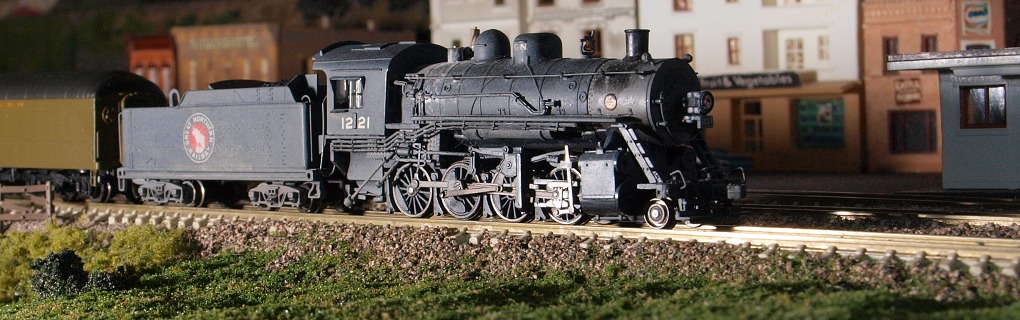
Connecticut’s Valley Railroad announced in January that its Chinese-built 2-8-2 steam locomotive is being converted to burn oil, and if successful, the railroad will convert additional engines.
Valley 3025, an SY-type 2-8-2 built at the Tangshan Locomotive and Rolling Stock Works in 1989 and made to look like a New Haven locomotive, is presently down for its federally-mandated 15-year overhaul. While the engine is out of service, the railroad has decided to install an oil-burning system. The railroad said it was making the change because oil was easier to acquire and handle than coal. The railroad would also save money by disposing of less ash.
The Valley is just the latest in a long line of steam operators that have decided to convert to oil, including the Durango & Silverton, Cumbres & Toltec Scenic, and those restoring Reading 2100 and Chesapeake & Ohio 2-8-4 2716. Aside from it being easier to acquire oil, groups have also cited environmental reasons, most notably the desire to continue operating during dry conditions. The trend is also underway in England for the same reasons.
—Justin Franz
The post Valley Railroad to Convert 2-8-2 to Burn Oil appeared first on Railfan & Railroad Magazine.
CSX on Jan. 28 reported the successful cutover of an extended hump lead at Avon Yard, delivering “measurable gains in efficiency, capacity and railcar velocity.” (Watch video above.)
The project—completed incident and injury free—added 3,500 feet of new track, extending the hump lead to a total of 8,000 feet. According to the railroad, this “enhancement allows Avon Yard to process full length trains in a single cut, improve remote control switching movements, and reduce railcar dwell time—strengthening the fluidity of freight movement through the terminal.”
Avon Yard can now handle an additional 200 to 300 railcars per day, which CSX pointed out helps it move customer shipments from origin to destination faster and with greater reliability.
“The goal is efficiency—switching cars as quickly as possible so they don’t spend unnecessary time in the yard,” said David Clark, Director of Construction Engineering at CSX. “This extension gives our teams the room they need to operate more effectively and deliver better service.”
CPKC (Courtesy of CPKC)CPKC on Jan. 28 announced that, as part of its ongoing Board succession planning, Gordon Trafton, a current CPKC Board member, has been appointed Vice Chair. It also announced that Marc Parent has been appointed to the Board effective Jan. 27, 2026, and that Kate Stevenson has been nominated to stand for election as a director at CPKC’s Annual General Meeting of Shareholders in April 2026.
Gordon Trafton (Courtesy of CPKC)Trafton, of Naperville, Ill., has been a Board member since Jan. 1, 2017. He retired in 2010 from CN, following a 33-year railroad career that included time at CN, Illinois Central, and Burlington Northern Railroad. From 2003 to 2009, he successively served as Senior Vice President, Strategic Acquisitions and Integration, and as Senior Vice President, Southern Region at CN. Prior to that, Trafton worked as CN’s Vice President, Operations Integration.
On CPKC’s Board, Trafton chairs the Risk and Sustainability Committee, serves on the Management Resources and Compensation Committee, and previously served on the Board’s Integration Committee.
“I am honored to be appointed Vice Chair of the Board,” Trafton said. “Isabelle Courville has established a legacy of excellence as Board Chair, and I look forward to working closely with her, my fellow Board members, and our talented management team as we forge ahead together in our commitment to maximizing the value of CPKC for our shareholders, employees, and customers.”
Marc Parent (Courtesy of CPKC)Parent, of Montreal, is a seasoned CEO and Corporate Director with more than three decades of leadership experience in the aerospace industry. Throughout his 15-year tenure as President and CEO of CAE, Parent grew the company into what CPKC described as “the undisputed leader in global aviation training and simulation.” He has also been appointed to the Order of Canada, the country’s highest civilian honor.
“It is with great excitement that I join CPKC’s board,” Parent said. “CPKC plays a vital role in connecting communities and nations while driving economic growth across the continent. I look forward to collaborating with the talented CPKC team to shape the company’s next phase of growth and success.”
CPKC is proud to be named one of Alberta’s Top Employers for 2026 for the 7th consecutive year. Read the feature here: https://t.co/53FlBv1CLy #ABTopEmployers #TopEmployers2026 pic.twitter.com/oVyBhgzjLL
— CPKC (@CPKCrail) January 28, 2026The post Class I Briefs: CSX, CPKC appeared first on Railway Age.
The Phoenix City Council on Jan. 27 approved a new expansion of Valley Metro’s light rail system to west Phoenix after voting to end the Capitol light rail extension that would have connected downtown Phoenix to the state Capitol.
The City Council voted by a 7 to 2 vote to expedite light rail along Indian School Road, which will “provide west Phoenix with its fair share of transit and development opportunities and will connect Valley Metro and west Phoenix’s residents, businesses, and neighborhoods.”
The City of Phoenix and Valley Metro had been working to extend light rail to the state’s Capitol and west down the middle of Interstate 10. However, the Arizona State Legislature, the City Council says, “has the specific legal authority to block stations within a certain part of the state Capitol Mall, via legislation previously signed by then-Governor Ducey.”
The new path will serve Maryvale, as well as the Encanto and Alhambra villages, allowing residents to more easily access jobs, education, entertainment, and a host of other amenities across the Valley.
“Valley Metro appreciates the City Council’s thoughtful consideration of transit options that will best serve west Phoenix residents and businesses,” the agency said in a statement.
“We remain committed to advancing high-capacity transit to west Phoenix to meet significant demand, support mobility in this corridor and to continue to deliver upon the community’s vision for transit and transportation. Following the Phoenix City Council’s decision, Valley Metro will exit project development and the Capital Investment Grant process for the Capitol Extension (CAPEX) project.
“As directed by Phoenix City Council, we will advance planning of the West Phoenix corridor along Indian School Road. Comprehensive community engagement will be central to this work, ensuring we hear from all residents, business owners and stakeholders along the corridor as we develop solutions that serve the needs of west Phoenix. We will work closely with the City of Phoenix on project development and begin coordinating with our partners at the Federal Transit Administration to explore funding opportunities.”
Santa Clara VTAAs the primary public transit agency serving Levi’s Stadium, VTA says it is prepared to “deliver record ridership safely, smoothly, and reliably” for crowds attending the Super Bowl LX. Planning began immediately after Levi’s Stadium was named host, building on lessons learned during Super Bowl L 10 years ago.
VTA SBLX wrapped light rail train“We know what it takes,” said VTA General Manager and CEO Carolyn Gonot at a press conference Monday, Jan. 26, 2026. “We’ve taken every lesson from Super Bowl L and built an even stronger, smarter, more efficient plan for Super Bowl LX.”
VTA is working closely with local, state, and federal partners to ensure a coordinated, region-wide security approach.
A comprehensive emergency management plan for large-scale events is in place, supported by extensive training and exercises over the past year. A dedicated Emergency Operations Center will be activated to monitor conditions, coordinate responses, and share real-time information. VTA’s cybersecurity teams will operate around the clock to protect critical systems.
On Super Bowl Sunday, VTA will operate 22 additional light rail trains on top of regular service. Most will be three-car trains, each carrying approximately 450 passengers directly to the stadium.
Due to security constraints around Levi’s Stadium, VTA has adjusted its service plan. Passengers traveling from downtown San Jose or Milpitas BART will arrive and depart from Lick Mill Station on the east side of the stadium. Passengers connecting from Caltrain in Mountain View will arrive and depart from Great America Station on the west side. This post-game departure plan, VTA says, is expected to reduce wait times and move fans out faster.
VTA expects to transport approximately 25,000 fans, surpassing previous record ridership levels seen during the Taylor Swift concerts in 2023.
System-wide preparations include track repairs to eliminate slow zones, upgraded ticket machines and information displays, and enhanced station readiness. Up to 100 VTA ambassadors, wearing blue VTA vests, will assist riders throughout the system on game day.
NYMTAThe New York MTA on Jan. 28 announced a record increase in subway customer satisfaction in the Fall 2025 Customers Count survey. The subway system saw increases across all key metrics, with 62% of subway riders reporting they feel satisfied with the system overall, which is a five-point increase from the Spring 2025 survey, and the highest percentage since the current Customers Count survey was launched in 2022, according to the agency.
NYMTA photoThe questionnaire, which was offered online in nine languages and included a phone option, gauged satisfaction levels of 92,269 customers between Oct.14 and Nov. 2, 2025. Now in its fifth year, the Customers Count survey allows the Authority “to better understand riders’ most significant concerns and prioritize issues that need to be addressed across the MTA network.”
Customer safety is at record highs, with 63% saying they feel safe on trains. This is a six-point increase from the Spring and the highest level reported since the survey began in 2022. Fifty-nine percent feel safe in stations, up from 54% in the Spring; 53% of riders feel safe on subway platforms, a five-point increase from the Spring. This is also the first-time platform safety was above 50% since the question was introduced in Spring 2023, according to the MTA.
According to the survey, 65% of subway riders say they are satisfied with their train line, up four points from 61% in the Spring 2025 survey. The top performing lines all gained from the previous survey—the 7 is at 73%, the G is at 72% and the Q is at 72%. Satisfaction with service reliability is also up two points to 62%. Other metrics, including satisfaction with waiting time (59%) and frequency of delays (53%) also saw two percentage point increases from the Spring. Satisfaction with cleanliness on board trains substantially increased from the Spring 2025 survey, up to 59% from 52%.
Overall subway satisfaction increased among subway customers in four boroughs, with 52% of Bronx customers satisfied, up from 46% in the Spring. This, MTA says, is the first time Bronx customer satisfaction is more than 50%. In Brooklyn, 63% of subway customers were satisfied, up from 57% in the Spring. Manhattan saw a five-point increase from the Spring, with 65% of subway customers satisfied; 59% of Queens customers were satisfied with the subway overall—a two-point increase from the Spring; Staten Island remained at 79%, consistent with levels reported in the Spring 2025 survey.
These survey results, MTA says, “reflect record-breaking 2025 operational performance for the subway system.” Subways hit six milestone months with historic on-time performance highs outside of COVID years, culminating in the best on-time performance year achieved since modern reliable record keeping began with a weekday on-time performance of 83.7%—a 2.1% increase from 2024. In May 2025, subway weekday OTP reached 85.2%, the best single month for performance in history.
These on-time performance improvements, the agency says, come as the MTA “explores new ways to use data to deliver better and more efficient service by making schedule adjustments based on ridership patterns and other factors.” This resulted not only in faster and more frequent service but also 13,000 fewer delays in 2025 compared to 2024, the MTA noted. In addition, service was increased service on several lines in 2025, including the A and L in November and the M in December in conjunction with the F/M swap.
The subway continues to see record increases in ridership growth, with nearly 1.3 billion rides taken in 2025—up 7% from the previous year. The subway also broke its post-pandemic single-day weekday and weekend ridership records on numerous occasions in 2025, most recently on Dec. 11 with 4.65 million customers. Notably, the MTA celebrated its one billionth subway rider of 2025 in mid-October—three weeks earlier than 2024 and nearly three months earlier than 2022.
More information is available here.
In related news, the New York MTA on Jan. 28 also announced that it has made a record $15.8 billion in capital commitments in 2025, “marking the largest single-year investment in transit infrastructure in the agency’s history.”
The commitments advance critical accessibility upgrades, state-of-good-repair work, and major megaprojects across the system, including more than $5 billion made possible through Congestion Relief funding. Projects advanced also included the first round of investments made possible by the MTA’s historic 2025-2029 Capital Plan, which was fully funded by Governor Kathy Hochul and the state legislature in the FY26 Enacted State Budget.
This historic year for capital awards includes investments across the transit system to improve reliability and accessibility, along with targeted investments in system expansion.
The MTA also awarded a significant $166 million contract for engineering and design of the Interborough Express last August, which advanced the project from planning to active phase. The MTA’s 2025-2029 Capital Plan includes $2.75 billion for this transformative transit expansion project between Brooklyn and Queens.
Thanks to funding from congestion pricing, the MTA says major projects are advancing, including:
In addition, 2025 saw progress on the MTA’s new 2025-2029 Capital Plan. This includes new contracts for more than 300 new train cars on the Long Island Rail Road.
The record-breaking year, the agency says, surpasses the previous mark set in 2022, when $11.4 billion in contracts were awarded.
In addition to the “record-setting commitments,” the MTA completed $6.7 billion in projects in 2025, trailing only 2023’s $7.1 billion as the strongest year for capital project completions.
Customers saw major benefits throughout the system in 2025, with 41 elevator replacements and 10 new accessible stations across the subways and railroads. That record setting number of replacements saw the average project duration drop by more than two months, the MTA noted.
Other major projects completed included circulation improvements at Grand Central as part of the 42nd Street Connection program, which saved $46.5 million; the opening of New York City’s new Rail Car Acceptance Facility in Brooklyn; and the rehabilitation of the lower-level main span deck of the Verazzano-Narrows Bridge. In addition, the MTA awarded a contract to Kawasaki last fall to construct 378 new R268 subway cars, which will ultimately replace nearly 50-year-old cars and improve reliability and performance.
Megaprojects also made major advances, according to the MTA. The first phase of the full replacement of the Park Avenue Viaduct—the elevated steel structure that carries four Metro-North Railroad tracks and serves all Metro-North trains traveling into and out of Grand Central Terminal—saw bridge replacement completed 21 months ahead of schedule and $93 million under budget. Further south, additional savings were achieved during the rebuilding of the Grand Central Train Shed that holds up Park Avenue and the surrounding skyscrapers above Metro-North tracks near Grand Central, which came in $20 million under budget in its first phase and has secured $75 million in private funding for the second phase.
The post Transit Briefs: Valley Metro, Santa Clara VTA, NYMTA appeared first on Railway Age.
The reflectorization rule (download below), according to the FRA, “sets minimum safety requirements to help motor vehicle operators see rail freight rolling stock at night and in poor visibility conditions.” This final rule would codify two waivers, one excluding rail freight rolling stock used only for tourist, historic, excursion, educational, recreational, or private (THEERP) purposes, except for incidental freight service; and one allowing the use of a performance-based method to determine when to replace reflectorization sheeting.
For the latter waiver, railroads had previously been required to replace reflectorization sheeting every 10 years, “even though sheeting can continue to perform effectively beyond the 10-year mark,” according to the American Short Line and Regional Railroad Association (ASLRRA), which published the announcement in its latest edition of Views and News. The FRA now allows alternative evaluation of sheeting but continues to retain the 10-year replacement cycle as an option. “Small railroads with limited equipment may still prefer the time-based approach,” noted ASLRRA, which added that it is “pleased with the new rule, as it provides regulatory flexibility for short line railroads.”
By publishing this final rule, the FRA, ASLRRA says, eliminates the need for railroads to submit waiver petitions and request waiver extensions every five years. The FRA will also no longer need to review and approve waiver petition and extension requests.
2026-01549DownloadThe post FRA Issues Final Reflectorization Rule appeared first on Railway Age.
On Nov. 4, 2024, at about 11:00 a.m. local time, a BNSF m/w employee (a grinder) driving a welding truck was fatally struck by a BNSF freight train as the welding truck was crossing a private highway/rail grade crossing at milepost 128 near New Rockford, N.Dak. (see figure 1, top), according to the report that was issued Jan. 20 (download below). Another BNSF m/w employee (a welder) who was on the passenger side of the welding truck was injured, transported to a nearby hospital, and released. At the time of the accident, the NTSB said, “visibility conditions were daylight but cloudy with about four miles visibility; the weather was 36°F with no precipitation but the ground was wet and soggy.”
RIR2601Download BackgroundAccording to the NTSB, the accident site had a single main track running southeast to northwest on BNSF’s KO Subdivision. On this subdivision, the maximum authorized speed for freight trains was 55 mph and train movement was coordinated by a BNSF train dispatcher from BNSF’s Network Operations Center located in Fort Worth, Tex. The track was signalized and equipped with a positive train control system, which was enabled and operating at the time of the accident, the NTSB said.
“At milepost 128.1, an unpaved farm road which ran east and west intersected the track at a skew angle of about 30°, making the grade crossing (accident grade crossing) a skewed intersection [known as any angle less than 90°],” the NTSB reported. “The accident grade crossing was paved to facilitate the movement of vehicles and was at a higher elevation than the unpaved farm road. The accident grade crossing was passive but equipped with stop signs on either side of the track for eastbound and westbound vehicles traveling on the farm road. A gravel road on the south side of the track ran parallel to the track. This road was used by MOW employees to access the track for repair work.”
According to the NTSB, on the day of the accident, a BNSF m/w team had been assigned to replace “a defective rail” at the accident grade crossing. The team consisted of a welding team (a grinder and a welder in the welding truck) and a maintenance team (four employees, a foreman who was also the roadway worker-in-charge of the m/w team, and a laborer in a pickup truck; and two vehicle operators in a boom truck).
“The roadway worker-in-charge had planned for the welding team and the maintenance team to position their trucks on either side of the track so that the rear of the trucks would be within a few feet of the track with the front of the trucks facing away from each other,” the NTSB reported. “This position would allow the welding team and the maintenance team to access the hydraulic systems of both trucks to facilitate the replacement work. According to this plan, the welding team and the maintenance team would wait for scheduled trains to pass, the roadway worker-in-charge would then establish track protection and conduct a job briefing, after which the welding team and the maintenance team would begin the replacement work.”
At about 10:40 a.m., the welding team drove down the gravel road on the south side of the track and waited for the maintenance team to arrive, according to the NTSB. About 15 minutes later, it said, the roadway worker-in-charge of the m/w team and the laborer drove down the same gravel road in the pickup truck and stopped behind the welding truck. Shortly after this, the NTSB continued, the vehicle operators backed the boom truck down the gravel road and stopped beside the pickup truck. “Because the boom truck arrived on the south side of the track, the welding team decided to back the welding truck over the accident grade crossing to the north side of the track because the trucks needed to be on either side of the track to perform the rail replacement work,” the NTSB reported.
The NTSB said that its review of the inward-facing camera in the welding truck “showed that at 10:59:45 a.m., the grinder began to back the welding truck toward the accident grade crossing. Video footage from the camera revealed that the welder was mostly looking out of the passenger side window and the grinder was using the side-view mirrors on the driver and the passenger sides to maneuver the truck. Video footage showed that the grinder did not accelerate to clear the track as the train was approaching from the 64th Avenue grade crossing.” According to the NTSB, its interview with the welder “confirmed that he did not see the train as they were backing over the accident grade crossing until about 4 seconds before the accident when he saw the train’s headlights in the side-view mirror on the driver side.” The maintenance team on the south side of the track “saw the train approaching and broadcast warnings over their radios to alert the welder and the grinder,” the NTSB reported.
The government agency noted that BNSF Safety Rule S-12.8 on backing vehicles, instructs employees to “position the vehicle, when possible, to avoid backup movement.” According to the rule, in cases where there are no other options, the NTSB reported, “BNSF requires a person to be present on the ground to guide the movement” and “also requires the person to inspect the ground to the rear of the vehicle and the driver to sound the horn if the vehicle is not equipped with backup alarms and to stop the vehicle if the person guiding the movement disappears from view.”
In its report, the NTSB said its review of the forward-facing cameras in the train’s lead locomotive revealed that at 10:59:47a.m., “the train horn sounded multiple times as the train approached the 64th Avenue grade crossing.” Additionally, the NTSB’s review of the inward-facing camera in the train’s lead locomotive “confirmed that the train crew was alert in the moments leading up to the accident.”
The NTSB said its “investigation confirmed that the actions of the train crew did not contribute to the accident” and the crew “took prompt action when they saw the welding truck backing over the accident grade crossing and applied the emergency brakes.”
Probable CauseThe probable cause of the accident, the NTSB reported, “was the welding team’s failure to detect the approaching BNSF Railway freight train as they were backing the welding truck over the private highway-railroad grade crossing.” Contributing to the accident: “the welding team’s noncompliance with BNSF Railway’s Safety Rule S-12.8, which requires positioning a person on the ground to guide the movement,” according to the government agency. Further contributing to the accident, it noted, “was the inadequate understanding of BNSF Railway’s Safety Rule S-12.8 by BNSF Railway employees.”
Lessons Learned“This accident highlights the dangers of backing vehicles over railroad tracks without positioning a person on the ground to guide the movement and the importance of following safety rules when backing vehicles over railroad tracks,” the NTSB said. “After the accident, BNSF clarified the backing rule by adding a section (Section S-12.8.1) that focuses on backing vehicles over railroad crossings, which emphasizes that either a person on the ground or on-track safety should be used during the movement.”
The post NTSB Determines Probable Cause for BNSF M/w Employee Fatality appeared first on Railway Age.
For fourth-quarter 2025, NS reported that revenue was $3.0 billion, income from railway operations was $937 million, operating ratio was 68.5%, and diluted earnings per share were $2.87.
After adjusting the results to exclude merger-related expenses and the effects of the East Palestine, Ohio, derailment in 2023, fourth-quarter income from railway operations was $1.0 billion, the operating ratio was 65.3%, and diluted earnings per share were $3.22.
For fourth-quarter 2025, NS posted:
For full-year 2025, NS posted:
“In the face of a volatile and challenging macro-economic backdrop, our team focused on the controllables—delivering outsized productivity savings in excess of $215 million that accompanies our safety and service improvements. As we move through 2026, the demand environment remains unclear, but we are steadfastly focused on prioritizing the safety of our employees and communities, delivering consistent customer service, and driving further productivity gains to contain our costs in any volume environment,” said George.
The post NS: ‘Reliable Service, Measurable Safety Gains’ appeared first on Railway Age.