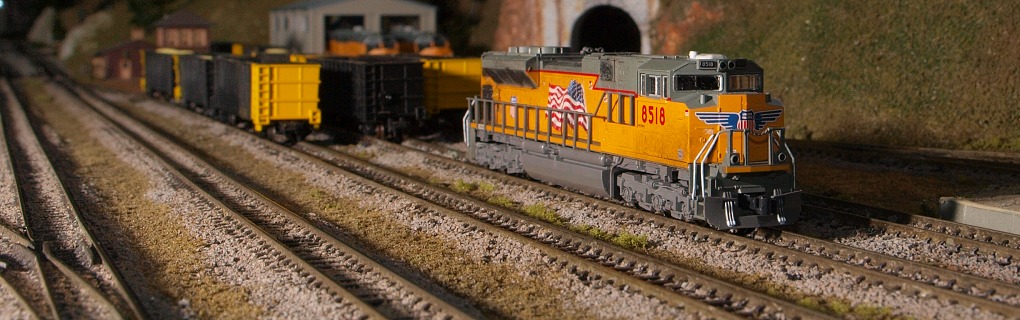
The votes are in: Shareholders of Union Pacific and Norfolk Southern, in Special Meetings held Nov. 14, approved the merger of the two railroads to form a U.S. transcontinental, with in-favor margins approaching 100%.
UP on Nov. 14 announced that 99.5% of votes cast were in favor of issuing new shares of UP common stock in connection with the NS merger. NS announced that its shareholders “voted overwhelmingly, with nearly 99% of the shares cast in favor,” to approve the transaction with UP. Under the terms of the agreement, NS shareholders will receive 1.0 UP common share and $88.82 in cash for each share of NS owned. The transaction, both companies said, is expected to close “by early 2027, subject to Surface Transportation Board review and approval within its statutory timeline and customary closing conditions.”
The preliminary vote count from UP’s special meeting of shareholders “represented nearly 80% of all outstanding shares,” UP noted. The final vote counts for both railroads will be reported in 8-K Forms filed with the U.S. Securities and Exchange Commission, after certification by UP and NS independent inspectors of elections.
“We appreciate our shareholders’ support in reaching this important milestone on our path to building [the U.S.’s] first coast-to-coast railroad,” said UP CEO Jim Vena. “Our shareholders see the value and understand this merger will unlock new opportunities to enhance service, growth and innovation. We look forward to filing our application with the STB and detailing how the transaction will provide seamless, single-line service across the country to improve transit times, safely increase reliability and strengthen the competitiveness of U.S rail.”
The transaction is subject to STB review and approval within its statutory timeline as well as customary closing conditions.
“The approval of our shareholders marks a key milestone in our journey to create the [U.S.’s] first coast-to-coast transcontinental railroad, combining complementary networks and capabilities to unlock a multiplier effect for benefits to all stakeholders,” said Mark George, President and CEO of NS. “The merger will preserve union jobs and improve safety while delivering faster, more reliable transit times. Together with UP, we will make rail more competitive with highways, offering customers new, more attractive shipping alternatives, unleashing the industrial strength of American manufacturing and creating new sources of economic growth across the country.”
Vena and George will appear jointly at Railway Age’s Next Generation Freight Rail Conference on March 10, 2026, at the Union League Club of Chicago. Joining them in separate sessions will be Keith Creel (CPKC), Tracy Robinson (CN), Tom G. Williams (BNSF), and Maryclare Kenney (CSX). STB Chairman Patrick Fuchs and Vice Chairman Michelle Schultz will appear jointly. The conference closes with NS EVP and COO John Orr, Railway Age’s 2026 Railroader of the Year.
The post UP, NS Shareholders Greenlight Merger appeared first on Railway Age.
Michael Baker International announced Nov. 13 that Reed will lead company-wide growth initiatives to drive innovation and expansion. Reed will work on identifying emerging markets, strengthening relationships with clients, and using data to pursue growth opportunities. Prior to his joining Michael Baker International, Reed served as Senior Vice President – U.S. Operations and Delivery Executive and Interim Transportation Business Line Executive at WSP USA where he led more than 5,000 team members. In this role, he worked to support operations, delivery procedures, staff management and project operations. Additionally, he served as Past President of the American Council of Engineering Companies San Diego Chapter. Reed holds a Bachelor of Science in Civil Engineering from Washington State University.
“As we focus on achieving our Vision 2030 goals, Michael Baker continues to strengthen its position as a trusted advisor – bringing together client insight with the scale and integrated capabilities of a national leader in engineering, technology and consulting,” said Brian A. Lutes, Chief Executive Officer at Michael Baker International. “Kevin will play a leading role in shaping our growth strategy, fostering innovation and ensuring we deliver transformative solutions that meet the evolving needs of our clients and communities. His leadership will help us unlock new opportunities and advance our mission as We Make a Difference through every project.”
Michael Baker International also announced that Chris Peters, P.E., S.E., will step into the role of Chief Operating Officer. As COO, Peters will work on operational excellence in four verticals, according to the firm. These four verticals are Infrastructure, Integrated Design and Advisory (IDA), Mitigation, Environmental, Resiliency, Response and Recovery (MER3), and GovTech. Peters will bring more than 30 years of architecture and engineering industry experience to “implement advanced processes and systems designed to optimize efficiency, enhance collaboration and position the firm for continued growth expansion.” Recently, Peters served as COO at WSP USA where he led more than 17,000 team members across six business lines, including program management, IT, and health safety, environment, and quality (HSEQ). Peters holds a Bachelor of Science in Civil Engineering from the University of MIssouri-Columbia and a Master of Science degree in Structural Engineering from Iowa State University.
“Chris brings exceptional leadership and a proven track record of operational success to Michael Baker International,” said Brian A. Lutes, Chief Executive Officer at Michael Baker International. “His deep industry expertise and strategic vision will be instrumental as we continue to strengthen our operations, enhance collaboration across our verticals to work as One Michael Baker and deliver innovative solutions that drive growth for our clients and our firm.”
The post Michael Baker International Taps Peters, Reed appeared first on Railway Age.
After Metra introduced its 2026 budget in October, the Illinois Legislature approved reforms and significant new funding for public transportation in northeast Illinois. The legislation, the agency says, “was prompted by the pending exhaustion of federal COVID-relief funding that Metra and other transit agencies have been using to balance budgets since the COVID-19 pandemic.” Metra expects its COVID funding to run out in the fourth quarter of next year.
The new funding allowed Metra to revise its budget to eliminate a proposed fare increase and fund modest service increases while still covering an expected $27.9 million shortfall, the agency noted. The revised budget also eliminates a planned $60 million transfer from the operating budget to its capital plan.
The $1.2 billion budget (download budget book below) includes $55 million for costs related to a Northern Indiana Commuter Transportation District (NICTD) construction project that expands capacity on the Metra Electric Line, which is being reimbursed by NICTD. Excluding that cost, the budget for operations is about $50 million higher than the 2025 budget. The increase, Metra says, “is due to expected inflationary, contractual, and market increases; modest service increases; successful filling of vacancies; and higher costs related to Union Pacific (UP) and BNSF service.”
The budget is funded by system-generated revenue of $305.1 million, including $187.9 million in fares, as well as $635.9 million in regional sales tax receipts, Metra’s remaining $206.1 million in federal COVID-relief funding, and $27.9 million in new funding.
The $515.3 capital program is funded by $426.7 million in federal formula funding and discretionary grants, $88.6 million in Illinois PAYGO funding, and $100,000 in an RTA Access to Transit grant. The program allocates $268.2 million to rolling stock; $68.5 million to bridges, tracks and structures; $59.1 million in signals, electrical and communications; $27.3 million in facilities and equipment; $59.9 million in stations and parking; and $32.3 million in support activities.
The budget will now go to the Chicago Regional Transportation Authority (RTA) for its final approval.
Brochure_8.5x11_ProposedBudgetBook_2026_SM_FINAL_WEB_0DownloadThe post Metra Approves $1.2B Operating Budget for 2026 appeared first on Railway Age.
The Heber Valley Railroad in Utah has added two stainless steel dome cars to its growing fleet of passenger cars. In late October, the tourist railroad moved two domes — Chicago, Burlington & Quincy “Silver Scene” and Atchison, Topeka & Santa Fe 503 — from storage near Salt Lake City to Heber City, where one was about to enter regular service as of this writing. At the same time, the railroad also moved a recently acquired buffet-lounge car, Denver & Rio Grande Western 1291 “Royal Gorge.”
The three cars join a growing fleet of passenger equipment on the Utah tourist railroad, with 20 cars presently in service and another 15 waiting in the wings. Over the last few years, the railroad has put together an impressive fleet of passenger equipment to meet the demands of growing ridership.
The two dome cars are a first for the Heber Valley, which runs on a former Rio Grande branch in the Wasatch Mountains southeast of Salt Lake City. The “Silver Scene” was once used on the California Zephyr. The car was last used on the Montana Daylight and was recently refurbished in St. Louis. Santa Fe 503 was once used on the Super Chief and has spent the last few decades in private car service across the United States. The car was most recently based in California along with the “Royal Gorge.”
Heber Valley Chief Mechanical Officer Michael Manwiller said the two domes will serve the railroad well as it increases its premium excursion offerings. In recent years, the railroad has acquired several stainless steel cars and painted a few of them into a Rio Grande-inspired livery, giving the railroad a modern-day version of the D&RGW’s Prospector.
—Justin Franz
The post Heber Valley Adds Domes to Growing Passenger Car Fleet appeared first on Railfan & Railroad Magazine.
by Justin Franz/photos as noted
If any railroad was going to exploit the scenic splendor of Moab, Utah, it would have been Denver & Rio Grande Western. After all, it was the Rio Grande that brought us icons like the Silverton, the Ski Train, and the Zephyr. But despite the awe-inspiring arches, deep canyons, and red rock spires it winds through, the Cane Creek Subdivision had never once seen a regularly scheduled passenger train.
That is, until now, thanks to a Canadian company that over the past 35 years has ricocheted from the edge of bankruptcy to the top of the pack, becoming one of the most successful luxury railroad tour operators in North American history.
While some in the railroad world might dismiss it as “just another tour train,” the numbers prove that to be a mistaken view. After all, any railroad operating in two countries with more than 100 pieces of rolling stock, 1,000 employees, more than 2,000 route miles, and nearly 2.4 million satisfied passengers since its first season in 1990 is not just another tour train. In short, Rocky Mountaineer is in a league of its own. Which is why I find myself in Moab on a scorching August day. Inside the modern Hoodoo Hotel, a few blocks off Moab’s main drag, Rocky Mountaineer employees help check in last-minute arrivals. Before long, we’re gathered up to board a motorcoach for the short ride north of town to catch our train, the Rockies to the Red Rocks, which will take us east across the former Rio Grande to Denver — though, because we’re going from west to east, “Red Rocks to the Rockies” might be a more accurate moniker.
ABOVE: Sometimes, host railroads Canadian Pacific and Canadian National would have to lend a hand to the upstart Rocky Mountaineer. On September 17, 1995, the westbound First Passage to the West is seen with an RMRX B36-7 and a borrowed CP Rail GP38-2 at Ottertail, B.C., on CP’s Mountain Subdivision. —Steven J. Brown photo
Cruising through town along U.S. Route 191, our host (a Moab-based employee who will not be joining us on the rail portion of the journey) provides insightful commentary about the landscape and its cultural history. It’s a glimpse of the next 27 hours in the care of Rocky Mountaineer.
A few minutes later, a thin blue and white line appears against the red landscape. After arriving from Glenwood Springs, where the train had overnighted, the appropriately named Rockies to the Red Rocks discharged its passengers before its two GP40-3 locomotives (of Baltimore & Ohio and Seaboard Air Line heritage) ran around the consist in preparation for its eastbound trip. Our motorcoach pulls right up to the train, and we’re greeted as we walk across a red carpet embroidered with the name “Rocky Mountaineer” and onto the waiting train.
As I settle into seat 44 — checking out the food and drink menu and a newspaper that describes the journey ahead — a glass of champagne is placed on the seatback tray in front of me. After more than a decade in railroad journalism, having crawled around oily diesel shops and ridden filthy freight locomotives, I can safely say this is a first. With boarding complete, the train starts to roll north for the 21.3-mile trip to Brendel, where we’ll join the former Rio Grande (now Union Pacific) main line. As we depart, we’re introduced to the onboard crew — Train Manager Zach, Car Hosts Joey and Paul, Bartender Leigh, and Chef Carol — who lead us in a toast to the journey ahead. It’s a near-flawless introduction to how Rocky Mountaineer does business.
ABOVE: On August 29, 2024, Rocky Mountaineer’s Rainforest to Gold Rush exits a tunnel and crosses a bridge deep within in the Cheakamus Canyon at mile 55.70 on Canadian National’s Squamish Subdivision. The section of railroad was once operated by BC Rail. With CN planning to cease operations on this scenic part of its railroad in the coming years, the future of the train between Vancouver and Jasper via Prince George is uncertain. —Julien Boily photo
Big Scenery, Bigger Bet
But it wasn’t always this flawless. Rocky Mountaineer’s early years were marked by mismatched equipment, unpaid bills, and a hope that it would all work out. Luckily for the company and its backers, they had access to one of the most scenic pieces of railroad on earth.
Not long after completing the first transcontinental railroad across Canada, Canadian Pacific Railway realized it had more than just a connection to the West in its main line across the mountains of Alberta and British Columbia; it also had a way to bring people into the breathtaking beauty of the Canadian Rockies. The railroad quickly sought to exploit the scenery through which it traveled, building various amenities for tourists, most notably, the Banff Springs Hotel in 1888. In later years, the government-backed Canadian National Railway also contributed to the development of areas farther north near Jasper. Both railroads promoted their transcontinental trains as the best way to access the mountains. On CP, the most popular train was the Mountaineer, which traversed the most scenic parts of the railroad in daylight.
However, by the 1960s, as CP and CN started cutting back on their passenger services, the railroad’s remaining transcontinental trains traveled through the mountains of Alberta and British Columbia at night. This practice continued after VIA Rail took over passenger train services north of the border. In an effort to attract some of the passengers who had turned to scenic motorcoach tours, VIA launched a new train in 1988 called Canadian Rockies by Daylight. The train would depart from Vancouver in the morning and spend the night in Kamloops, where passengers would stay in a local hotel before continuing to either Banff on CP or Jasper on CN. The first train left Vancouver on June 5, 1988. Among the guests on that inaugural run was a young businessman named Peter Armstrong, who had the contract to bus passengers to and from their Vancouver hotels. No one knew then that it wouldn’t be the last time Armstrong would ride the train. In fact, as former Rocky Mountaineer executive and author Rick Antonson later wrote in his book Train Beyond the Mountain, “VIA’s management may have soon regretted the invitation.”
ABOVE: RMRX GP40-3s 8021 and 8020 lead the eastbound Rockies to the Red Rocks out of Tunnel 29 just east of Pinecliffe, Colo., on May 2, 2025. On this portion of the former Rio Grande, the train will pass through two dozen tunnels in just 13 miles. —Joe McMillan photo
The train usually consisted of an F40PH-2 and ex-CN coaches, running from June through October. In 1989, it was rebranded as Rocky Mountaineer, a tribute to the former CP train that was discontinued in the 1960s. While the weekly service did bring some passengers back to the rails, it couldn’t withstand the changing political landscape in Ottawa. In 1990, Prime Minister Brian Mulroney’s Conservative government cut VIA’s subsidies in half, resulting in the elimination of several trains, including the famous Canadian. The name of the former CP train would live on, running on the more northern CN route, but destinations like Banff and Lake Louise no longer had regular passenger service. Another casualty was the Rocky Mountaineer. However, instead of simply discontinuing the train, which had found a small but viable market, VIA chose to sell it.
Among the bidders was the Vancouver businessman who had taken the inaugural run a few years earlier. Armstrong told friends that he enjoyed the ride but saw many ways to improve the service. He also had experience running former government-operated services, having previously privatized a public bus system. In early 1990, Armstrong left the bus company and founded Mountain Vistas Railtour Services to bid on the train route. While multiple bidders threw their hats into the ring, Armstrong’s team emerged victorious. In April of that year, he acquired the rights to operate the train, the Rocky Mountaineer brand, two baggage cars, and a dozen ex-CN/VIA coaches. The new railroad, soon renamed Great Canadian Railtour Company, was just getting its feet under itself when it had to operate a previously scheduled media train in late April. The company had hardly any employees or motive power, but the train operated as planned, using borrowed VIA F40PH-2s, and Armstrong and his friends dressed in rented tuxedos as car hosts. They also supplied a well-stocked bar to compensate for any shortcomings of the hastily organized trip.
On May 27 and 28, 1990, Rocky Mountaineer launched its inaugural season with weekly trips from Vancouver to Calgary through Banff, called First Passage to the West, and Jasper, named Journey Through the Clouds. Similar to the VIA era, the train operated as one from Vancouver to the overnight stop in Kamloops, then split into two to continue to their respective destinations. For the first few years, the motive power consisted of a pair of leased ex-Atchison, Topeka & Santa Fe B23-7 locomotives. During the initial season, the two locomotives (numbers 7488 and 7498) kept their previous owner’s “bluebonnet” livery before being repainted into a blue and white scheme with Rocky Mountaineer’s goat logo prominently displayed on the nose.
ABOVE: Host Joey Torres gives commentary about the history, geography, and geology of eastern Utah and western Colorado as the eastbound Rockies to the Red Rocks rolls through Ruby Canyon on the former Rio Grande Fifth Subdivision. Today, it’s Union Pacific’s Green River Subdivision. —Justin Franz photo
That first season was widely praised as a success, which was enough for the company to announce plans to expand its service for the 1991 season. However, inside Rocky Mountaineer, things were not going smoothly. When Armstrong bid on the train, VIA had claimed it already had advance bookings for 17,000 passengers during the 1990 season. But when Armstrong and his team actually got their hands on the books, it turned out to be only 7,500 passengers. Although Rocky Mountaineer was able to sell additional tickets, the numbers were still far below the company’s initial estimates. The company lost $1 million in its first year. Its troubles worsened when a two-part documentary series titled Last Train Across Canada aired on PBS in late 1990, highlighting the cuts to VIA Rail service, including the transcontinental Canadian. Suddenly, Rocky Mountaineer representatives had to reassure American travel agents that, despite the documentary’s title, passenger trains still operated in Canada.
The following year, the company lost $2.9 million, and by the end of its third season in 1992, the railroad was more than $7 million in the red. Hotels and other contractors were demanding full payment, and the outlook was bleak. “We’d leave the office wondering if creditors would have the doors locked up when we came to work the next morning,” an employee later said…
Read the rest of this article in the December 2025 issue of Railfan & Railroad. Subscribe Today!The post Rocky Mountaineer: Still Climbing appeared first on Railfan & Railroad Magazine.
Jack Stryker/photos by the author
It’s 7:15am on a quiet July morning in Detroit. While the city is still getting its day started, at the Roger Penske Technical Center (RPTC), the morning operations supervisor (acting as dispatcher for the day) is getting things in motion as the first streetcar pulls out of the terminal. The streetcar operator radios the dispatcher for clearance out of the wash bay out to the battery charge bar located at the intersection of Woodward Avenue and Lothrop Street, confirming tracks are aligned, doors are open, and flaggers are in place.
Minutes later, at exactly 7:30am, SC 287 pulls down to West Grand Boulevard at the official north end of the QLine main line and boards passengers. “Carmen,” the automated female voice that does the PA announcements, greets the boarding passengers — “Grand Boulevard… Welcome to the QLine.”
Origins and Construction
The first street railways appeared in Detroit following an 1862 city ordinance allowing lines to be built along the main routes of the city including East Jefferson, Woodward, Michigan, Gratiot, Grand River, and West Fort. After a number of mergers and consolidations creating Detroit United Railway, the city took control in 1922 and formed Detroit Department of Street Railways (DSR). During the postwar era, the city began converting streetcar lines to bus operation as ridership declined. The formal end of streetcar operation in Detroit was marked with a special parade along Woodward Avenue on April 8, 1956. The slow-moving PCC streetcars all carried banners advertising the new bus service that would replace them.
ABOVE: QLine car 291 rests at one of the five parking setups in the storage yard behind the Roger Penske Technical Center in August 2021.
Trolleys made a brief return in 1976 with the opening of the Detroit Downtown Trolley. Originally planned to be a standard gauge line, the tracks were ultimately built to narrow gauge to take advantage of vintage cars available from Lisbon. Built along Washington Boulevard, the three-quarter-mile line was operated by Detroit Department of Transportation (DDOT). In 1980, the line was extended another quarter mile to connect to the new Renaissance Center. By 2001, only one car out of seven remained in service, which resulted in slower hourly service; the trolley line closed in 2003.
In 2006, DDOT conducted a study of expanding mass transit options for Woodward Avenue. Meanwhile, a group of business leaders decided to provide matching private funds to develop a $125 million, 3.3-mile line through downtown Detroit that would be called the “M-1 Rail Line.” After extensive discussion between the investors and DDOT, the two groups adapted DDOT’s plan for a 9.3-mile line connecting the Rosa Parks Transit Center and Eight Mile Road where the State Fairgrounds are, using the Woodward Avenue route.
There would have been 19 stops served by 10 trains, with each train envisioned having two cars to carry up to 150 passengers. The trains would operate in a dedicated right-of-way in the median of Woodward Avenue between Adams Street at the north edge of Grand Circus Park north to Eight Mile Road. South of Adams Street, the trains would run with traffic along the sides of Woodward Avenue through the rest of downtown.
To cover the roughly $500 million projected cost, The Kresge Foundation provided $35 million in March 2009, the U.S. Department of Transportation (USDOT) would provide $25 million in February 2010, and Detroit City Council approved the sale of $125 million in bonds on April 11, 2011. The Federal Transit Administration and the city of Detroit signed the environmental impact statement on July 1, 2011; the record of decision was signed on August 31, giving the project the green light.
ABOVE: With the ad-wrap color palette matching the sky above almost perfectly, streetcar 288 passes in front of the Detroit Institute of the Arts in the Midtown District in May 2025.
However, in December 2011, the federal government withdrew its support of the line in favor of a bus rapid transit system to serve the city and suburbs. Coupled with economic damage the recession had inflicted on Detroit and its industries, a determined group of corporate and philanthropic leaders stated it would continue developing the 3.3-mile line under their nonprofit M-1 RAIL Consortium.
With the new Regional Transit Authority of Southeast Michigan created in 2012, the USDOT released the $25 million to M-1 RAIL. The project received its final environmental clearance from the federal government on April 26, 2013, with the construction contract awarded to Stacy & Witbeck on July 31 of the same year. Construction officially started on July 28, 2014, with USDOT kicking in an additional $12.2 million to complete the financing of the project.
At the same time right-of-way infrastructure construction was taking place, work began February 15, 2015, on the $6.9 million, 20,000-square-foot RPTC, which would be the center of operations and maintenance for the M-1 RAIL system. The system was later renamed “QLine” after Quicken Loans purchased the naming rights for $5 million on March 24, 2016; the actual operating organization would still be called M-1 RAIL, however, with Transdev North America hired under a five-year, $15.5 million contract on June 30, 2016, to handle the actual day-to-day functions of the streetcar system, including hiring and training of staff, managing and dispatching streetcar operations, maintenance of both vehicle and infrastructure, and more…
Read the rest of this article in the December 2025 issue of Railfan & Railroad. Subscribe today!The post QLine: Moving Detroit appeared first on Railfan & Railroad Magazine.
This month, we join Scott Lothes on his journey to northern Japan, on the island of Hokkaido (page 44). At first blush, this may seem like a trip to someplace wildly different. From a North American perspective, Japan may seem to be a dense, deeply urban place, simultaneously futuristic yet ancient. To bring this to a more railfan-centric perspective, Japan is also knit together with a network of high-speed “bullet trains,” the likes of which we can only envy. Yet, as I think Scott’s story helps show, there are many ways that the Japanese railway landscape is surprisingly familiar.
One thing we must keep in mind is that Japan’s railways were heavily influenced by North American practice. Early Japanese railway projects were designed with the assistance of foreign consultants, most of whom came from either the United Kingdom or the U.S. The result is that the Japanese system exhibits certain telltale signs of both railway traditions, from the predominance of 42-inch gauge (typical of British colonies) but also of a dense, weblike network of lightly built branches more typical of North America. Early equipment was UK-built, but by the turn of the 20th century, the most powerful locomotives in the country had been built by America’s Baldwin. Later, domestically built equipment showed such hybrid roots, with proportions and aesthetics that recalled British equipment, but other spotting features — such as tenders, cylinders, and couplers — being distinctly North American.
Nor are these influences found only in the past. Today’s Japanese rail network in many ways echoes our own, especially at the margins. Like our continent, Japan experienced a wave of so-called “deindustrialization” starting in the 1970s, with industrial modernization and increased global trade radically changing the nature of the economy. As in the American “rust belt,” many steel mills, coal mines, and power plants shut down, and rural populations steadily relocated into larger cities. The northern island of Hokkaido, for example, was once one of the world’s most important coal-mining regions, but much like the Appalachian region of the U.S., it is a place that seems more and more hollowed out, steadily emptying of traffic and of life.
For the railways that served such regions, the options were few but also familiar. Many lines that once belonged to Japanese National Railways or its privatized successors were, in essence, “spun off” into what Japan calls “third-sector railways” — what we might label “short lines.” Some of those companies have survived by reducing service, cutting overhead costs, and chasing new markets, much as our own short lines do, and likewise, not all of them have met with sustained success. It is not unusual, for example, for a small third-sector railway to turn to tourism as a means to generate traffic, and it is not at all unusual to find dinner trains, beer trains, scenery-viewing trains, and sometimes even steam locomotives to attract those tourists to the rails.
And then there’s the railfan world. If you go to YouTube, and search for “Japanese train videos,” you will find plenty of results. One of the more amusing aspects is to watch, say, a beautiful shot of a distant steam-hauled train, and then hear the distinctive click-click-click of a camera motor drive from some other railfan standing just out of view. If anything, there are probably more railfans in Japan than in North America, and yet many of their conventions are ours, too — from the “photo line” to spotter’s guides to rare-mileage trips. Perhaps Japan is an ocean away, and certainly it has its own distinct geography, culture, and history, and yet the more I have learned about its railways, the more I am impressed not by the differences, but by what we share.
—Alexander Benjamin Craghead is a transportation historian, photographer, artist, and author.
This article appeared in the December 2025 issue of Railfan & Railroad. Subscribe Today!The post Japan: Beyond the Bullet Train appeared first on Railfan & Railroad Magazine.
The Federal Transit Administration (FTA) has finalized guidance (download below) for its Capital Investment Grants (CIG) program, described as “the largest federal discretionary grant program for transit capital investments, including heavy rail, commuter rail, light rail, streetcars and bus rapid transit.”
FTA said it will revert to a previously used methodology that relies on the Environmental Protection Agency (EPA) National Ambient Air Quality Standards (NAAQS) designation, based on the city in which a transit project is located. This approach eliminates social cost of carbon criteria calculations.
The update amends FTA’s CIG Policy Guidance published in December 2024 and includes feedback FTA received when it published its Proposed CIG Policy Guidance for public comment in August. Among 16 respondents providing comments were “transit agencies, interest groups, policy organizations and individuals,” FTA noted. The agency said it will use this guidance for the CIG program’s FY2026 Annual Report ratings, available on the FTA website.
For more information, visit the CIG Regulations and Guidance webpage.
CIG-Policy-Guidance-November-2025DownloadThe post FTA Finalizes CIG Guidance appeared first on Railway Age.